Buckets, sticks, and stories — Inside Armenia’s woman-led tradition khabukhaz
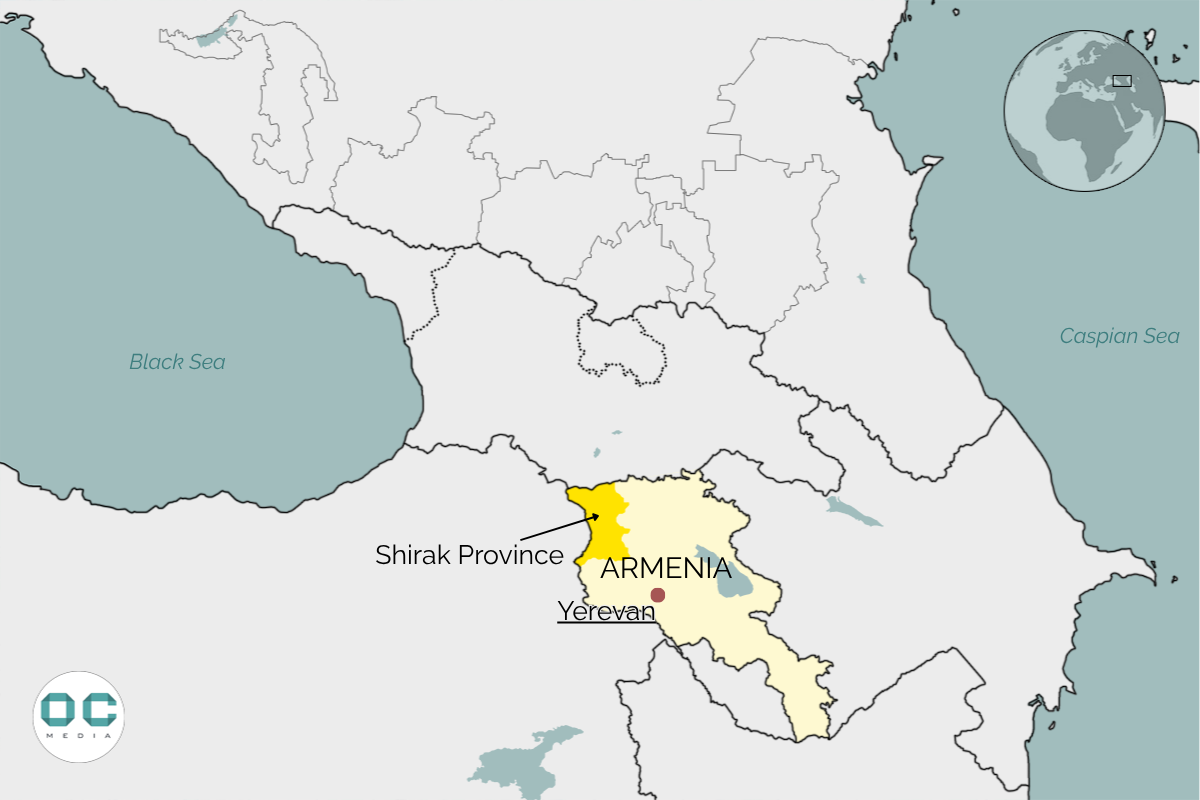
Khabukhaz is a woman-led milk exchange now only practiced in a few villages in Armenia’s Shirak province.


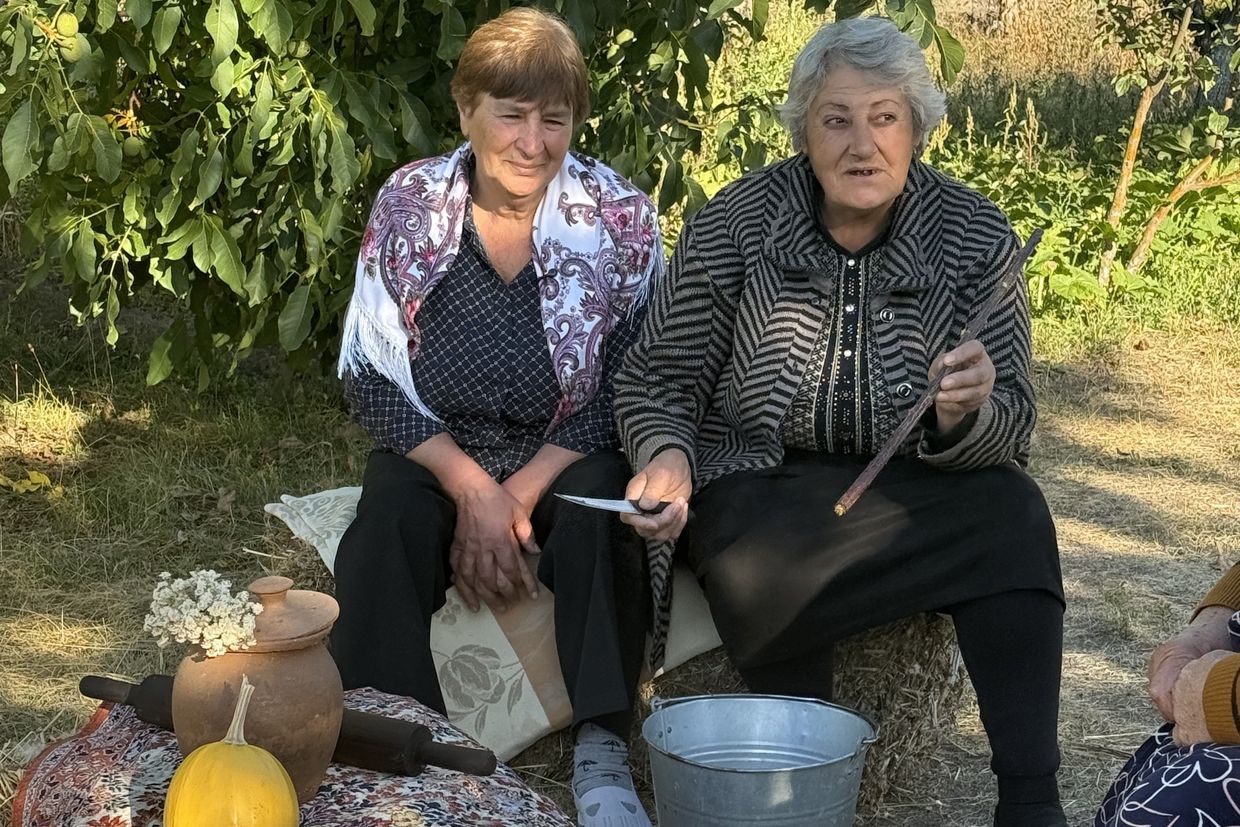
As the cheerful chatter of birds fills the morning air in the western Armenian village of Nor Kyank, a group of women gather with milk buckets and tree branches in front of 73-year-old Tania Harutyunyan’s house, who emerges to greet them. To the passerby, the scene might appear bizarre: the women make a sign over each of their sticks with a knife before placing them into the milk bucket and handing it to Tania.
This unusual ritual — known as khabukhaz from the Turkish khab (‘bucket’ or ‘container’) and khaz (‘sign’) — is a woman-led tradition that has helped communities survive for generations. Today, however, it is only practiced in a few villages in Armenia’s Shirak province.
Khabukhaz stems from a traditional form of milk exchange practised among dairy farmers. In effect, it was a system of providing milk on credit, where gatherings of five, six, or sometimes more women from the same district would exchange milk with each other.
According to custom, women from families with only a few livestock would give the milk they collected twice a day — morning and evening — in specified portions to a single family who would then redistribute the milk accordingly. In this way, during the abundant milk months from May to the end of November, each family had a fixed amount of milk they could use. This system helped solve production-related household problems in a way that benefited everyone.
It was a tradition based entirely on honesty and trust, because without integrity, one could easily dilute the milk with water. Every time milk was given to a neighbour, one was supposed to make a sign on their stick to get exactly the same portion of milk when her turn came.
Today, finding information about khabukhaz and its origins is surprisingly difficult. There are few written records, and it is unclear whether the tradition was ever practiced in other regions of Armenia. One of the rare references to khabukhaz can be found in Grigor Vantsyan’s book The Traditions of Armenian Communities, where the practice is briefly described, confirming its historical presence in village life.
In the Shirak region, however, livestock farmers still face challenges due to the scarcity of pastures. Many have already stopped raising animals because it not only requires an enormous amount of time, but also the proper environment for animals to graze and produce quality milk. It is these scarcities that have allowed the tradition to survive here, though the number of women practicing has dwindled.
The elderly women keeping the tradition alive
In Nor Kyank, Amalya Hakobyan, 91, Marik Margaryan, 72, Alvard Hovhannisyan, 65, and of course Tania, are considered masters of khabukhaz.
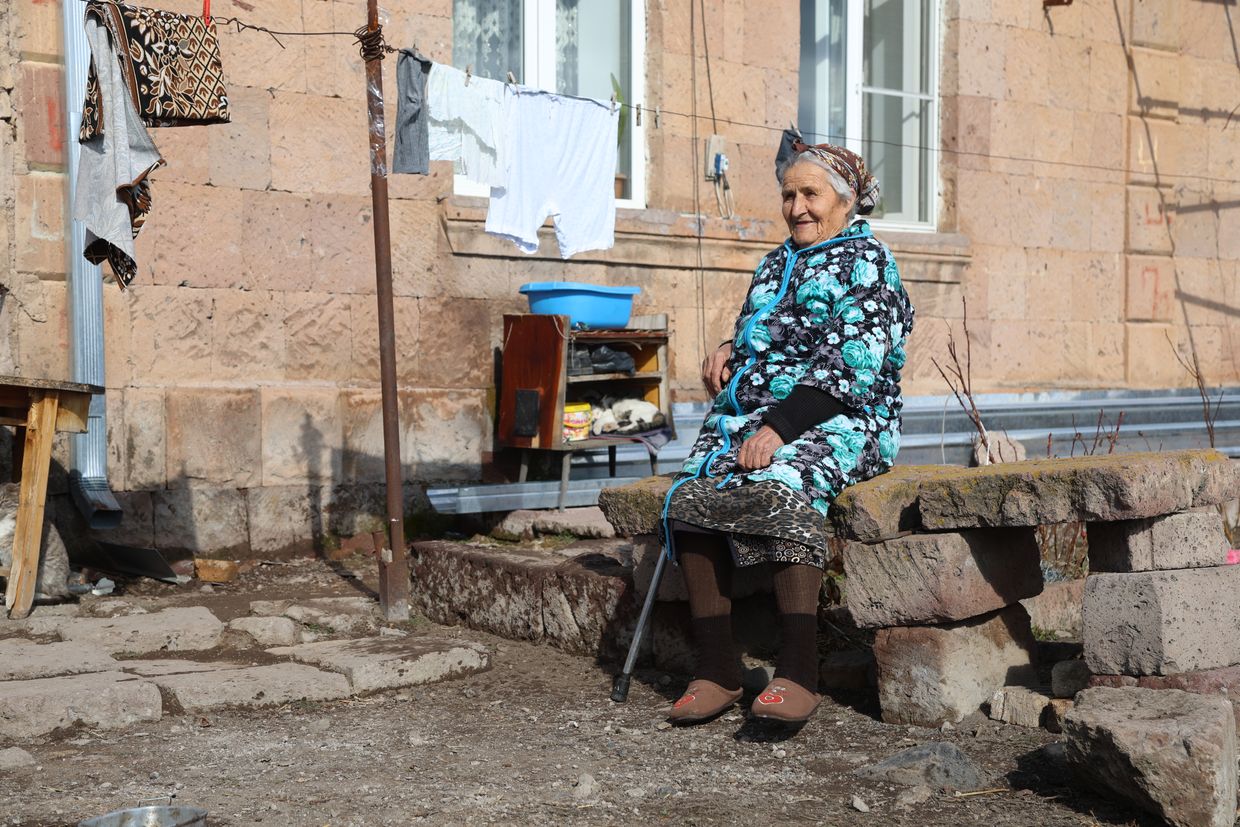
Tania, a former teacher, recalls that during Soviet times, it was not allowed to keep more than one animal, and the milk it produced was insufficient, which is why people decided to pool their milk together.
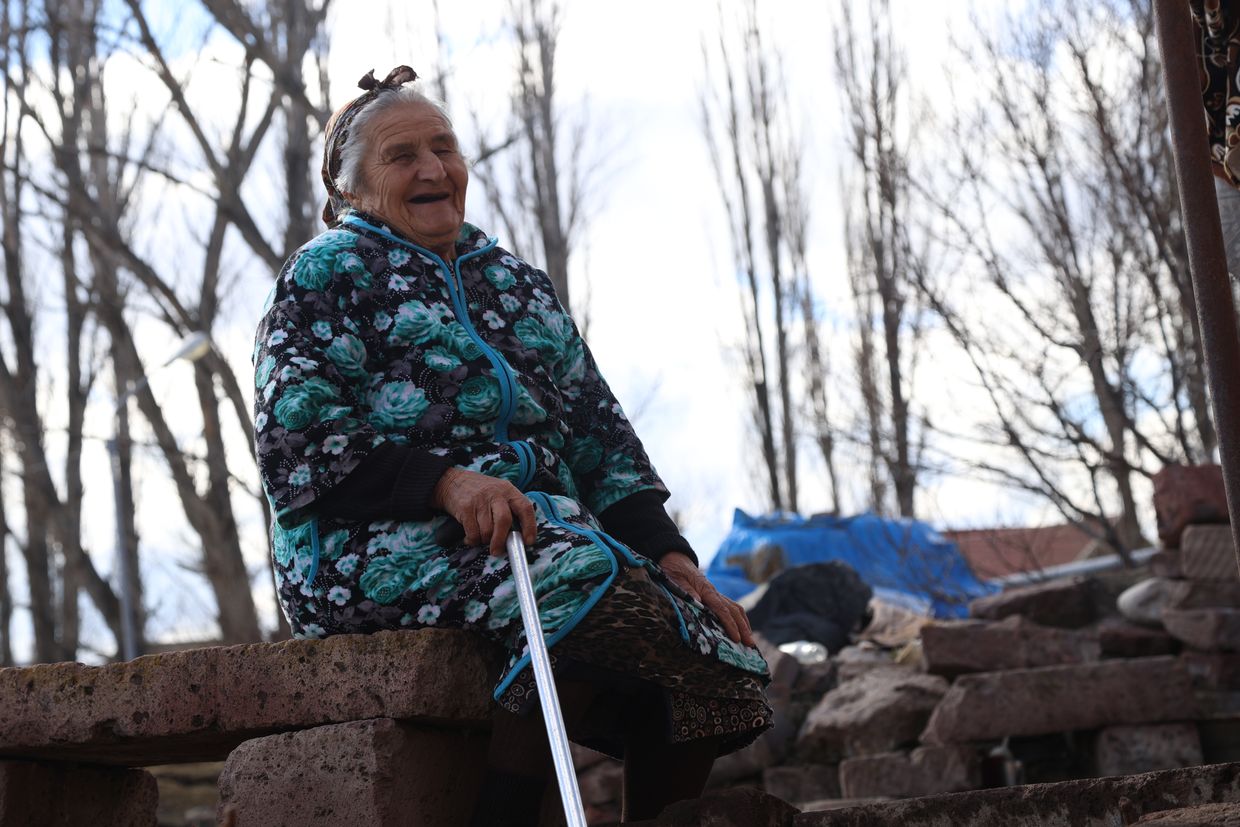
The eldest in the group, Amalya, was born and raised in Nor Kyank and has never left the village. She has practiced khabukhaz with different women throughout her life.
When she first married in the 1950s, women were generally not allowed to gather without a clear purpose, and khabukhaz offered a rare opportunity to leave the house. The women would explain that they were going to take part in the ‘milk lottery’, and no one would protest. Khabukhaz was a rare chance to rest and catch up on the village’s most delicious gossip. This women-dominated tradition never allowed men to enter the group or influence the process; here, the women were in complete control.
If a woman who wanted to join a group was not tidy enough, she would not be accepted. Usually, if the other women noticed that the yard of her house was not clean, or if the first milk she exchanged did not smell good, these would be seen as red flags, and the woman would be turned away.
‘I was with another group of women when I first got married’, Amalya says. ‘They kept gossiping all the time, and I didn’t like it, so I decided to leave their group and join Tania’.
Amalya began participating in Tania’s collective in 1958 — today, her daughter-in-law continues the tradition, as Amalya can no longer go milking due to her age and poor health.
Similarly, Alvard, who was born in Yerevan, only began participating in khabukhaz after marrying and moving to the village, following after her mother-in-law.
Every group that practices khabukhaz has a leader, usually the eldest woman, who decides who takes the first round of milk. The others are responsible for being honest and actively participating.
‘People who are not familiar with this tradition always wonder how we trust each other’, Alvard, who recently sold her cows, recalls.
‘We can’t lie to each other, and we never doubt anyone in the group’.
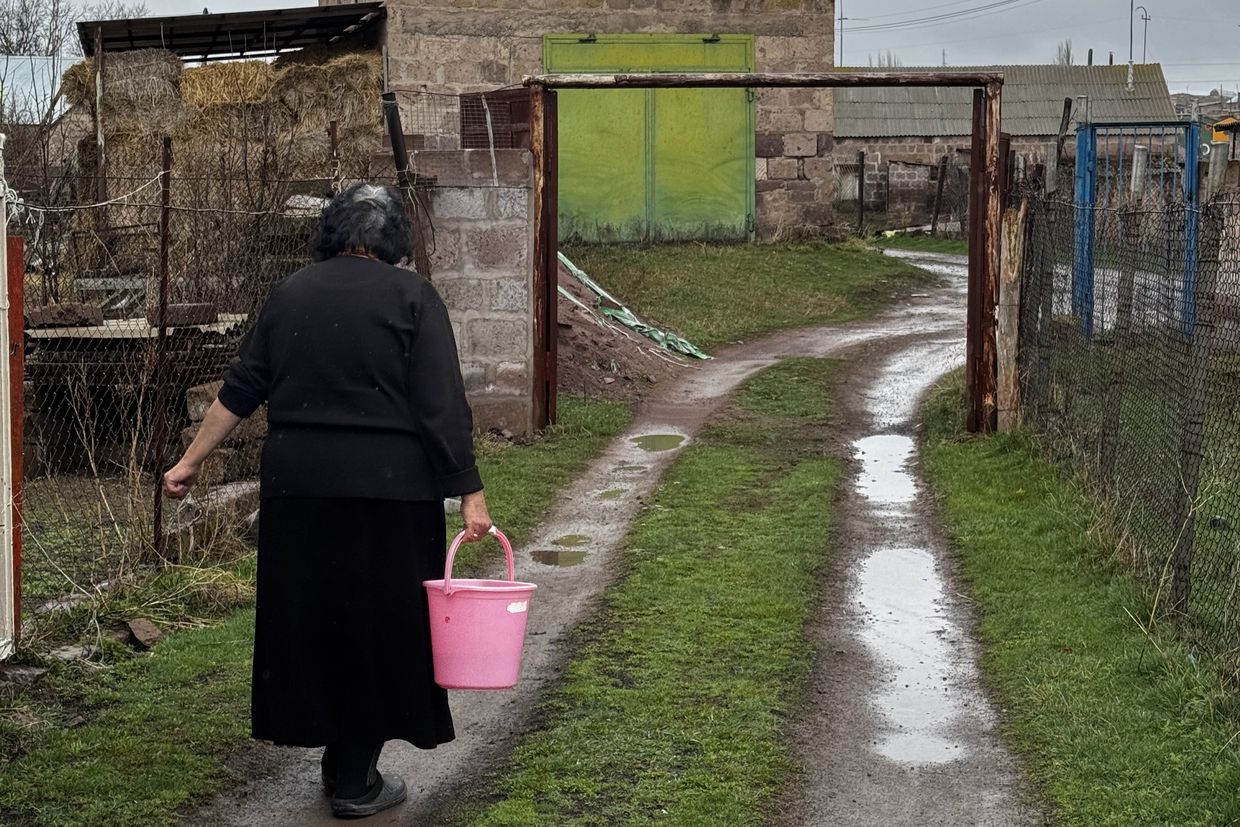
The women in the group call each other ‘khabchi’, meaning someone who practices khabukhaz. Every morning and evening, they gather to exchange milk and discuss village life — who is engaged, who is in the hospital, who needs help, and who has visited the village. They talk about everything except politics, avoiding negative energy in a life that is often hard to manage.
Today, however, of the large group of women who once practiced khabukhaz, only Tania’s and Amalya’s families continue the tradition today.
‘Only a handful of families in the village still keep animals. New brides who marry into our village don’t want to do animal husbandry; they simply buy milk’, Tania explains.
‘The next generation might have no knowledge of khabukhaz’
Even so, women in Nor Kyank are working to preserve the tradition, including through a Khabakhuz Club.
Marik Margaryan, from the nearby village Sarnaghbyur, is one club member. She is practicing khabukhaz with her neighbour, and views the club as a place where she can educate young people about village traditions, make new friends, and enjoy conversations. It is through the club that she and Amalya became close friends.
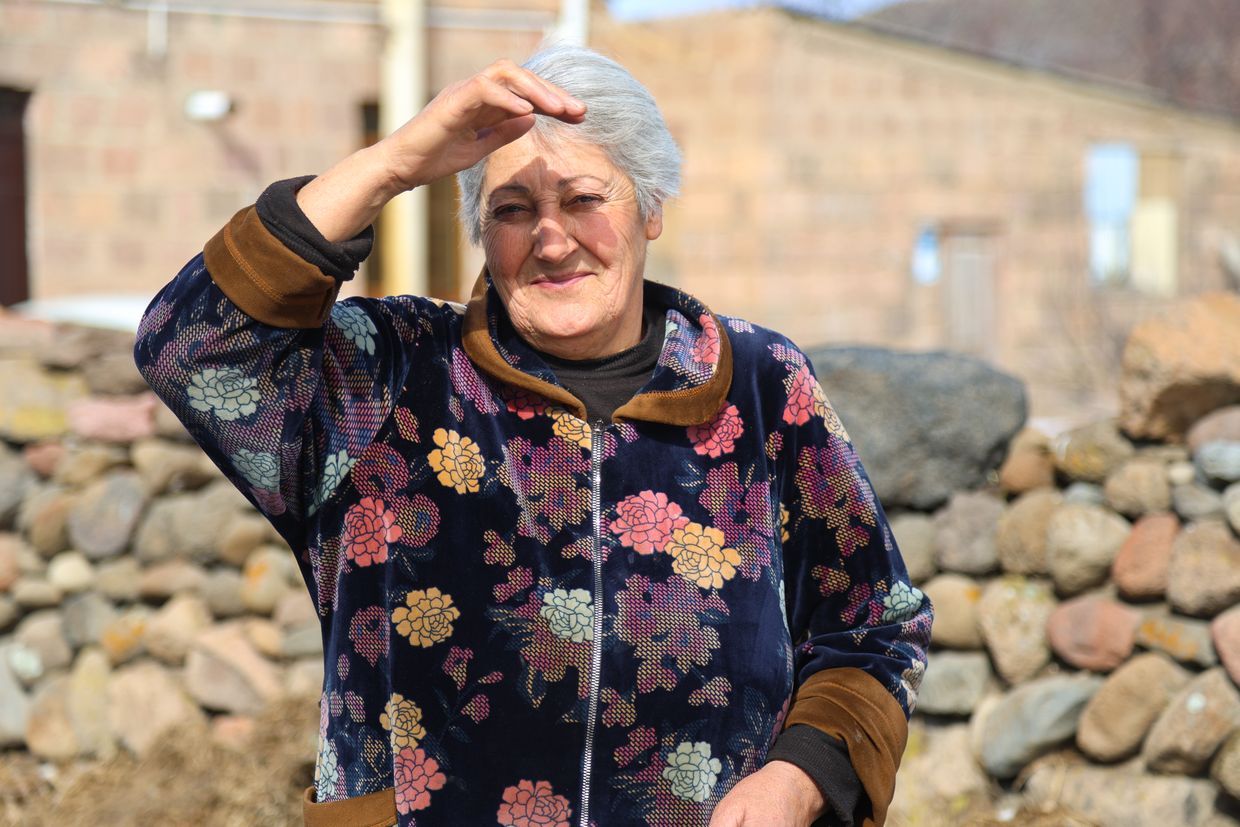
Speaking with OC Media, Marik notes that all the neighbouring villages once practiced khabukhaz because most households had animals, and the system was beneficial for everyone. The women would not use scales to measure the milk, believing that a scale might make mistakes in different densities between spring and autumn milk. In contrast, Marik says, the stick never lies.
‘So you take the stick and make a sign on it for the first day’, Marik says, ‘then when you bring another bucket of milk, you add the second sign, and so on’.
‘After 10–15 days, when it’s my turn to take the milk, we place the bucket on the ground, put the stick with all the marks in it, and as the milk is poured in, the first sign marks the portion for the first day’.
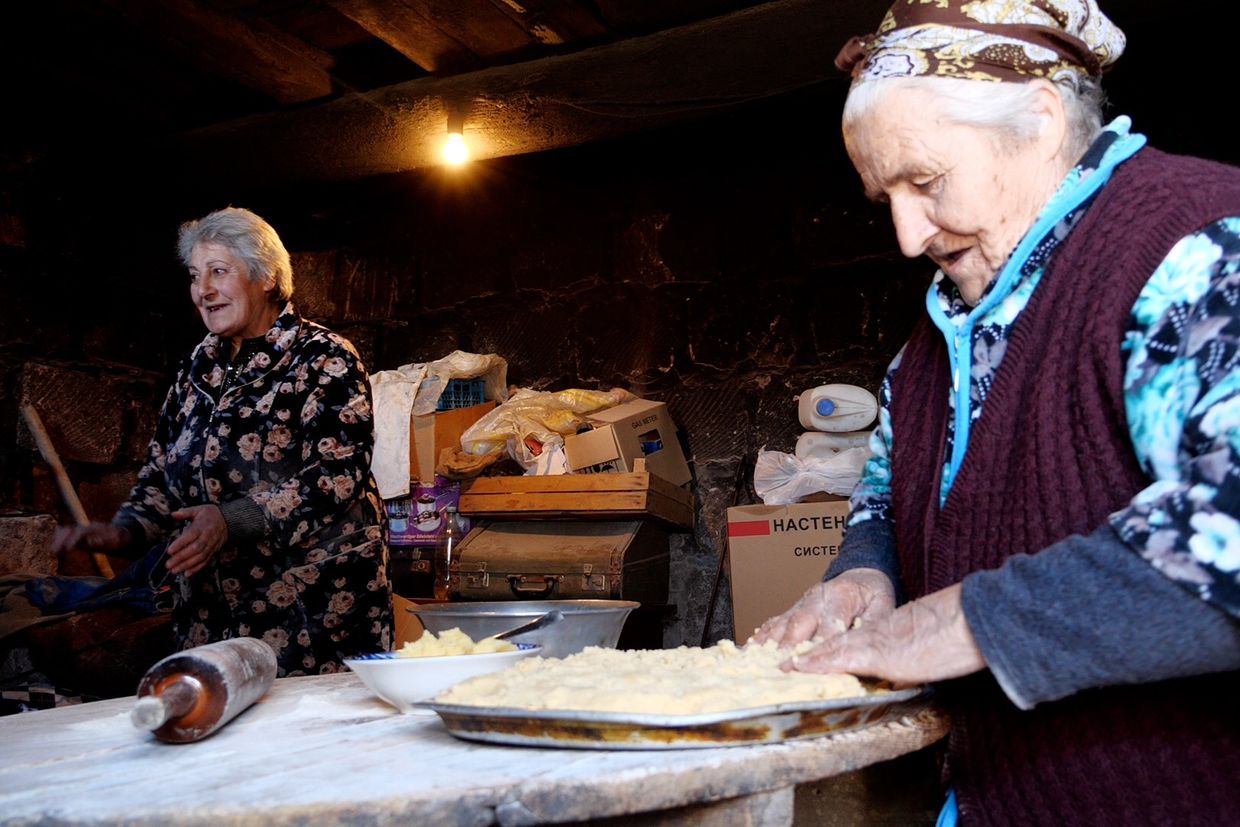
The Khabukhaz Club is just one project the Aragats Valley Local Action Group is helping to organise.
Established in 2022, the group aims to bring together eight settlements in the southern part of Shirak Province, uniting the communities of Artik and Ani, including the villages of Karaberd, Dzitankhov, Sarnaghbyur, Lanjik, Pemzashen, Lernakert, Nahapetavan, and Nor Kyank.
Tania’s granddaughter, Nelly Vardanyan, is the group’s executive director. She remembers how active khabukhaz was when she was a child, and how, as animal husbandry declined, the tradition began to fade. Now, not only have the khabukhaz groups become smaller, but the ritual itself is at risk of disappearing.
‘Following my grandmothers from both my mother’s and father’s sides, I realised that the next generation might have no knowledge of khabukhaz’, Vardanyan tells OC Media.
‘The aim of this club is to connect generations and give young people the chance to engage in conversations that might seem unusual or strange to us, but at the same time are fascinating and help us appreciate our culture’.
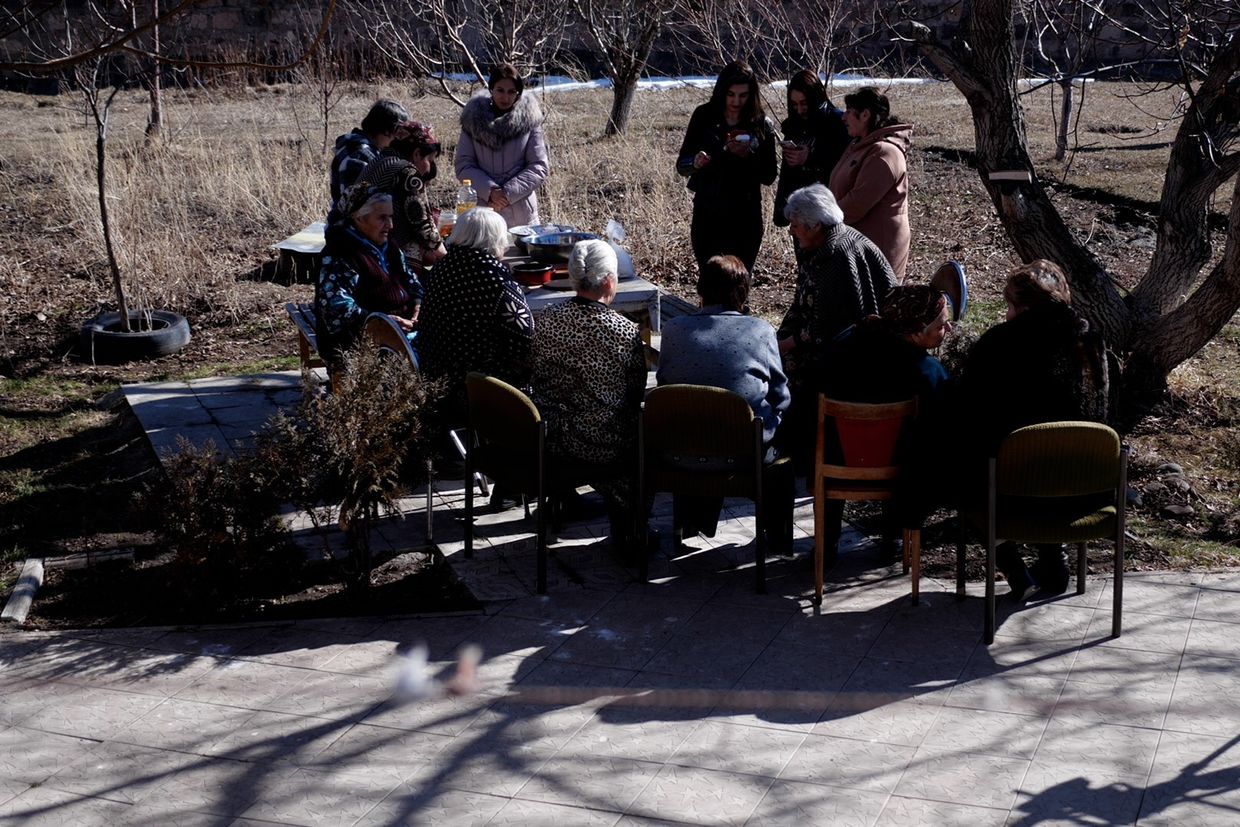
There is one story the women in the village love to tell about Nelly’s paternal grandmother Dasiko — though such retellings only began once Dasiko had passed away:
In the early 20th century, when Dasiko was a young bride in the village, she practiced khabukhaz with her neighbor Greta. They would meet early in the morning to exchange buckets of milk and begin chatting. Their conversations would last so long that, before they knew it, it was already 19:00 — the time for the second milking of the cows. Realising they hadn’t milked the cows or done any housework, they began to worry that the men would return and blame them for doing nothing all day. As a solution, Greta went home, pretended to faint, and laid on the ground as if she had been unconscious the entire day.
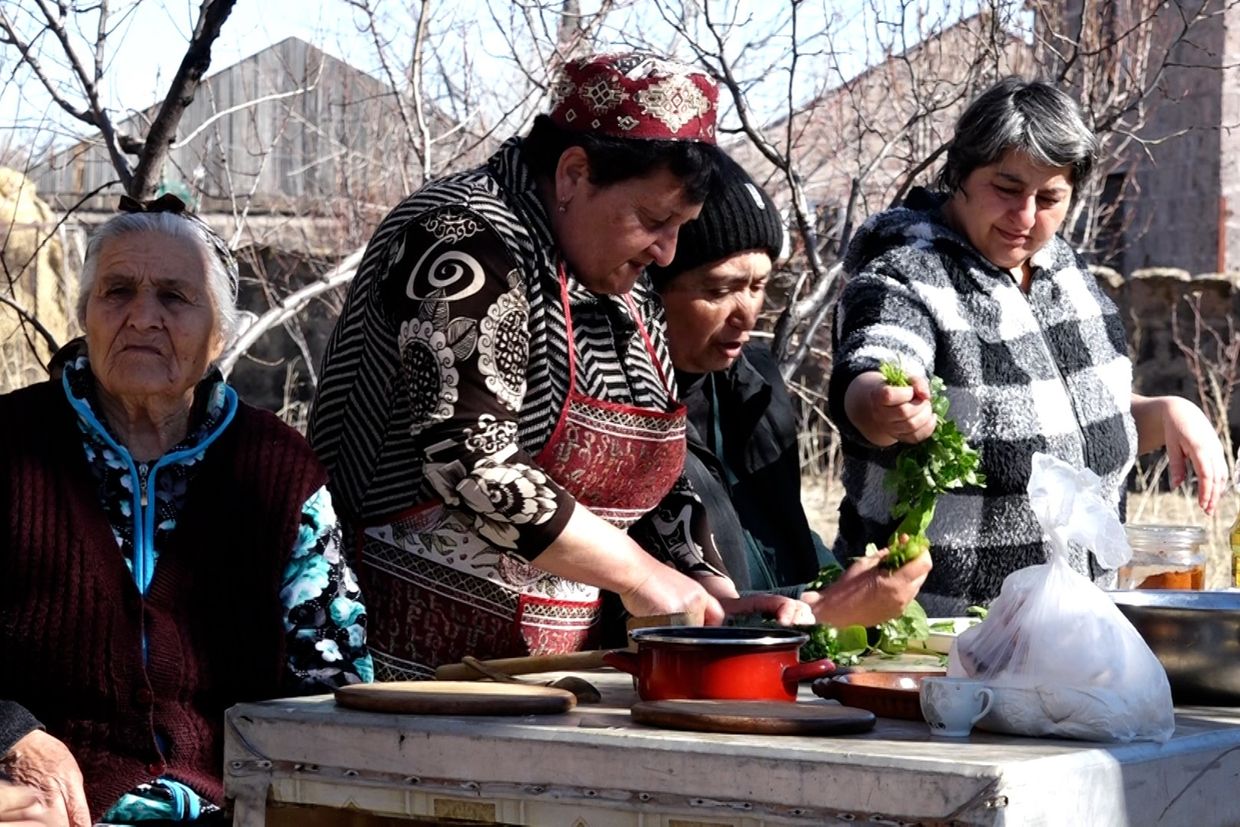
Nelly fears that her grandmother’s generation is probably the last to do khabukhaz.
‘We have districts in the village, where only one family keeps animals. Automatically they can’t practice khabukhaz, because people in the group should live in the same neighbourhood to engage in the process’, Vardanyan says.
Even so, she hopes the club may help re-invigorate the tradition. As she emphasises, khabukhaz is more than just exchanging milk — it is a way of trust, community, and care that sustained families long before modern systems existed. For in every bucket passed, there is not just milk, but a shared story of village life, cooperation, and mutual respect.